1. Iron: An Important Nutrient for Blood and Energy
Iron is an essential mineral involved in the production of haemoglobin, a protein in red blood cells that carries oxygen throughout the body. It also supports normal growth and development.
Women of reproductive age may have increased iron requirements because of menstrual blood loss. According to the NIH, the recommended dietary allowance for women aged 19–50 is generally 18 mg per day, compared with 8 mg for adults aged 51 and older. Iron requirements are higher during pregnancy.
Iron-Rich Foods for Women
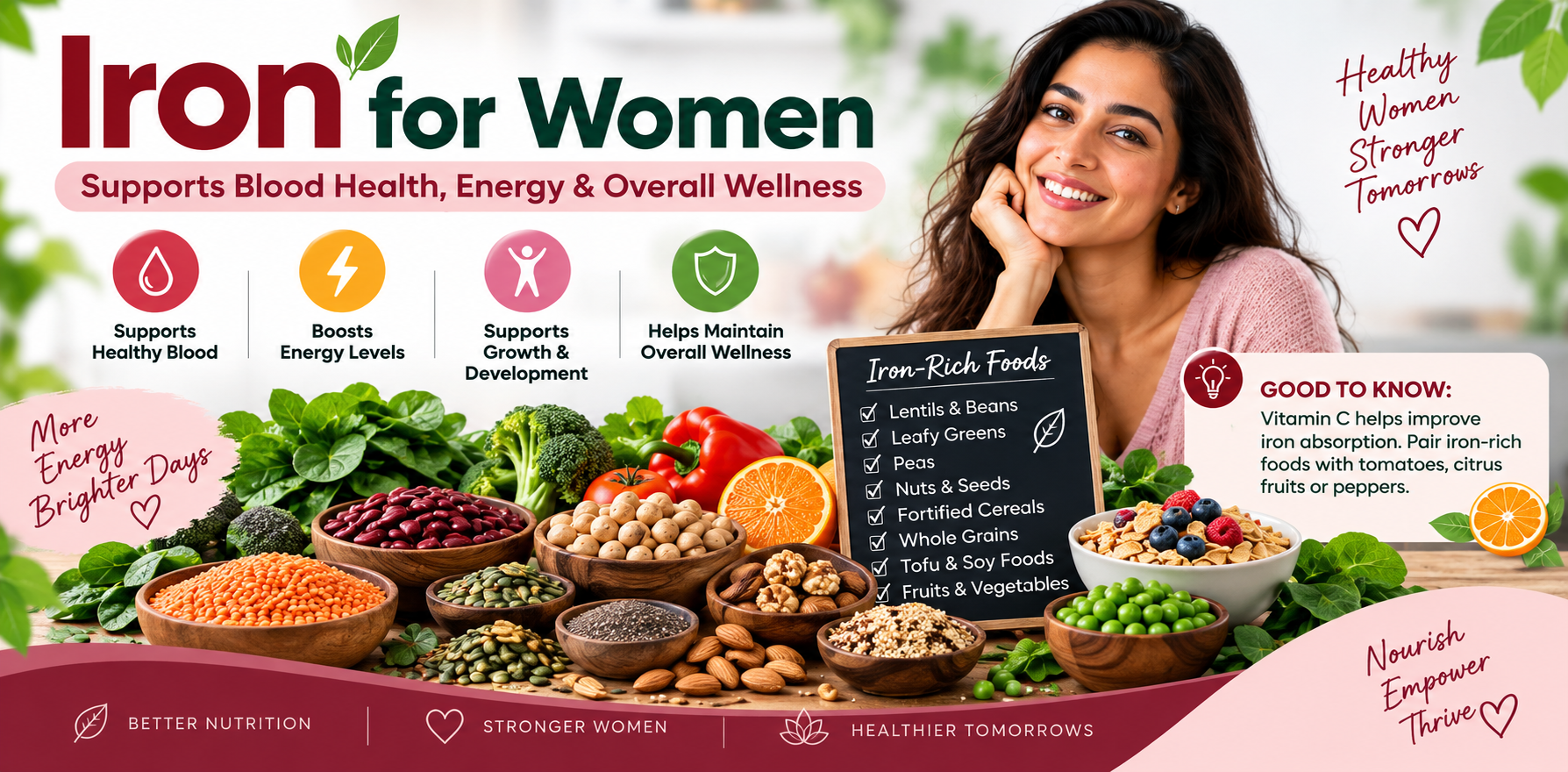
Include a variety of iron-containing foods in your meals, such as:
- Lentils and beans
- Spinach and other leafy green vegetables
- Peas
- Nuts and seeds
- Lean meat and poultry
- Seafood
- Iron-fortified cereals and foods
Vitamin C can help improve the absorption of iron from plant-based foods. Pairing lentils or leafy greens with tomatoes, citrus fruits, or peppers can be a useful dietary habit.
Important tip: Persistent tiredness does not automatically mean you have an iron deficiency. Speak with a qualified healthcare professional if you suspect a deficiency before starting high-dose iron supplements.

Leave A Comment