
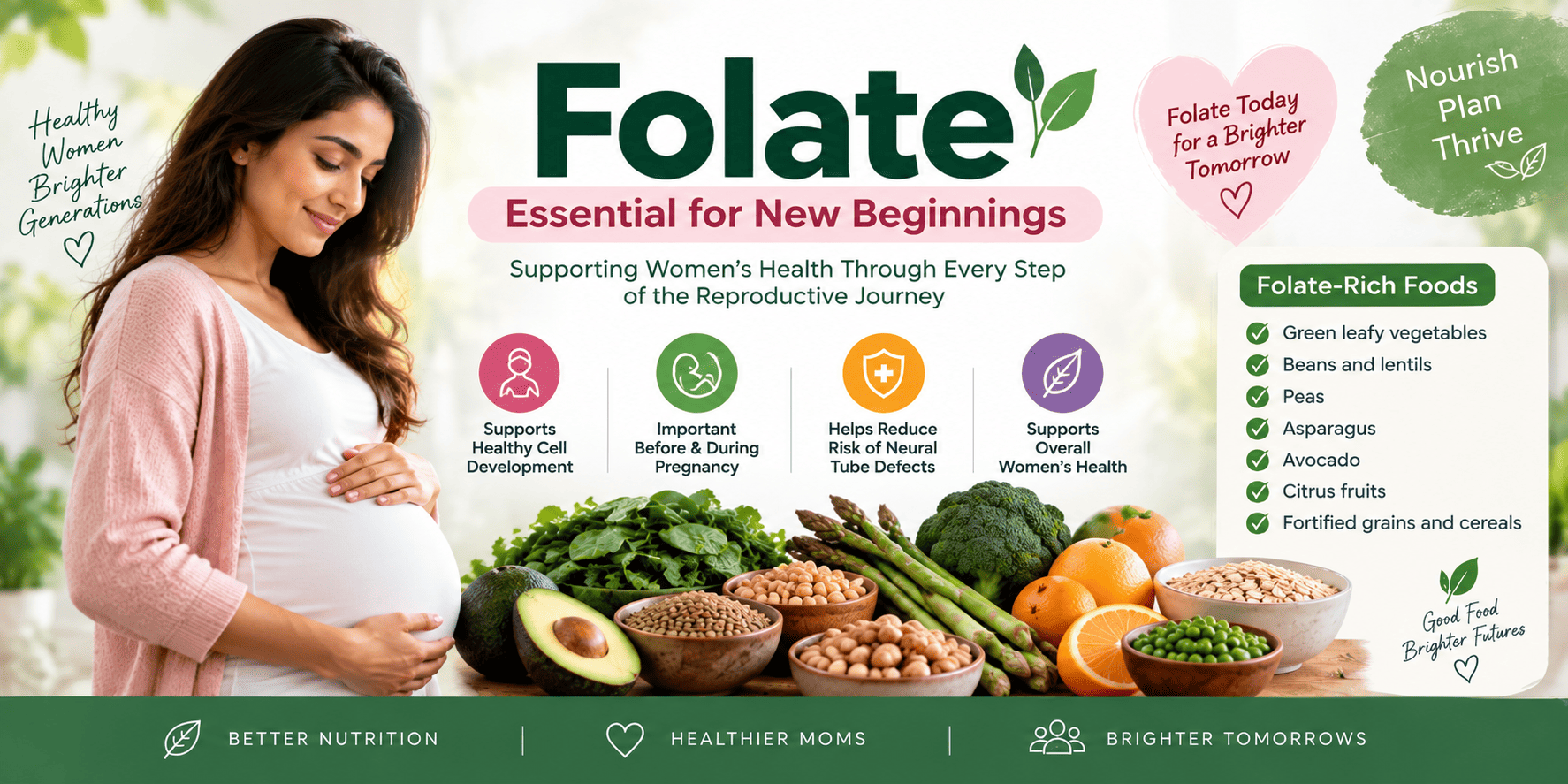
4. Folate: Especially Important During the Reproductive Years
Folate, also known as vitamin B9, supports DNA and RNA synthesis and amino acid metabolism. It is particularly important before and during pregnancy.
Adequate folic acid intake before conception and during early pregnancy helps reduce the risk of certain neural tube defects.
The NIH recommends that women and teenage girls who could become pregnant obtain 400 mcg of folic acid daily from supplements and/or fortified foods, in addition to folate from a varied diet. Pregnancy increases folate requirements further.
Foods Containing Folate
Consider including:
- Green leafy vegetables
- Beans and lentils
- Peas
- Asparagus
- Avocado
- Citrus fruits
- Fortified grains and cereals
Women planning a pregnancy should discuss folic acid supplementation with their healthcare professional to determine appropriate guidance for their circumstances.



Leave A Comment